Egg-cell experiments
Oocytes in culture
An egg cell can be the subject of an aging experiment without making the experiment a test of longer human life.
Mouse oocytes after ovulation
An oocyte is an egg cell. In the mouse-oocyte experiment, the difficulty was post-ovulatory aging, studied in culture. Epitalon reduced reactive oxygen species and modulated mitochondrial activity, with preservation of oocyte quality reported.
That precise difficulty appeals to me. Aging here describes deterioration in egg cells after ovulation. The word carries a much smaller span than it does in a conversation about an older person. The experimental result has value at that scale, without borrowing the emotional weight of an entire lifetime.
A human pregnancy rate would require a separate study in people. The paper here concerns mouse oocytes in vitro.
Quality and cellular activity
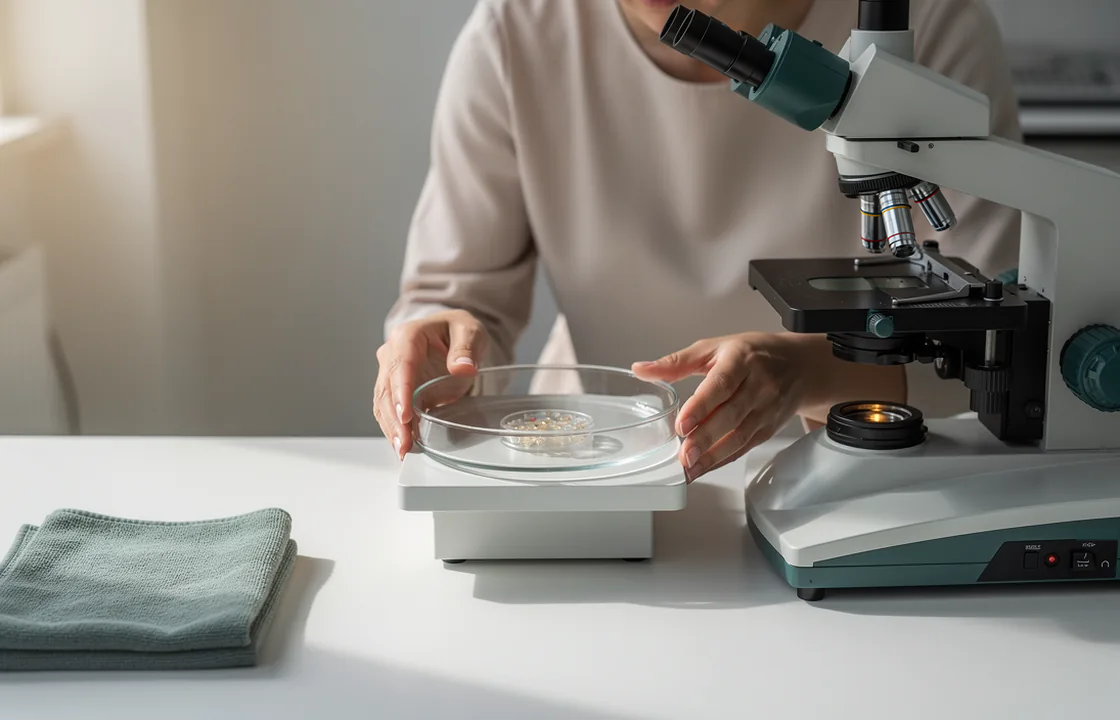
The reported changes in reactive oxygen species and mitochondrial activity accompany preservation of oocyte quality. Time standing still seems a poor image for this result. The useful subject is a cell preparation under a defined experimental difficulty.
There is a quiet attraction in a result that gives protection a concrete setting. It does not need a claim about rejuvenating a person to justify another experiment. The relation between those measured cellular changes and the quality outcome deserves closer investigation: how much of the explanation has actually been established?
A different task in gingival stem cells
A human gingival mesenchymal stem-cell study reported increased neurogenic differentiation markers after AEDG, the peptide also called Epitalon. These included Nestin, GAP43, beta-tubulin III and doublecortin. Binding to histones was proposed as a possible mechanism. The work was done in vitro.
This experiment gives the refuge a different occupant and a different task. The mouse paper concerns egg-cell quality after ovulation; the gingival stem-cell paper concerns markers of differentiation towards a neural identity. Those outcomes deserve separate names even with a shared peptide in the medium.
Marker changes alone leave plenty to investigate about function. That is why the pineal-cell experiment, with melatonin measured in the medium, makes an interesting companion.